Why I am going alone
It is not about money, and it is not courage. It is the only way I have found of being welcomed rather than received.

This piece was written in French. It is here in the original.
I get asked at every meeting, and never in the same order. Some start with safety. Others with money. Almost nobody asks whether it is the best way of doing what I intend to do. That is the only reason.
What it is not
It is not a budget constraint dressed up as a principle. Going with someone else would cost more, that is true, but if a team made the work better, I would find the money. You always find the money for what you are sure of.
It is not courage either, and I wish people would stop telling me it is. I am afraid. That is the normal state of someone who has understood what they are taking on. The worrying thing would be the opposite.
What people say to one person alone
Most reporting arrives with cameras, a team, interpreters. A team turning up somewhere is visible from a long way off. It sets things in motion: people tidy up, word gets round, someone is chosen to speak. That is not bad faith, it is human. But what happens next is no longer quite the ordinary life of the place — it is the version shown to the people with the cameras.
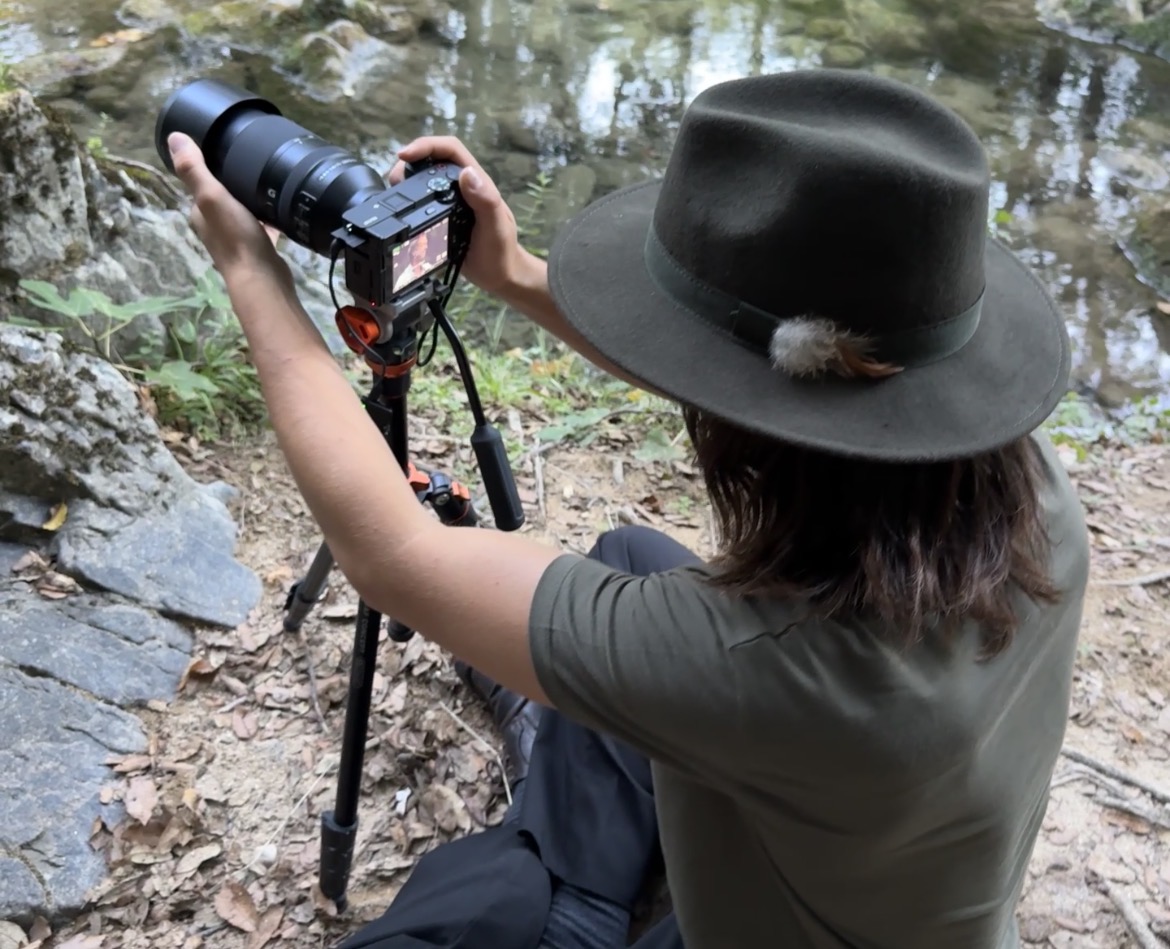
One person alone does not set that off. They disturb less, and they are forced into something harder for them: asking for help. Where to sleep, where to find water, who to talk to. Those questions build a relationship, where a self-sufficient team builds none.
“Travelling light is not a small budget dressed up as a principle. It is what makes people talk to me.”
Flavio WTranslated from the French
There is a second effect, less obvious. Alone, I cannot take refuge in the work. No technician to discuss the framing with, no colleague to unwind with in French in the evening. I am forced to be there. It is uncomfortable and that is exactly the point.
What it costs
It would be dishonest to show only the good side. I have listed what wears you down, in the order it arrives, according to the people who went before me.
What gives way first, and it is never the van:
- Deciding, constantly. Where to sleep, who to talk to, when to move on. A thousand times a day, with nobody to settle it with.
- No feedback. Nobody to say that what you are doing means something. After six weeks, that counts.
- Being on, permanently. Being the stranger who arrives, introducing yourself, explaining, charming a little. Without ever putting the part down.
- Loneliness, last of all. It comes later than you think, and harder.
So there are safeguards, and they are set before I leave, because they cannot be improvised once I am out there. A fixed weekly call with the same person, at an agreed time, whatever happens — not a message, a voice. A daily ritual that depends on nothing: ten minutes of writing in the evening, always at the same time. One day in seven with no filming, nothing asked of anyone, nothing published, decided in advance, because otherwise it never happens.
And a list of warning signs, to reread along the way. If I stop taking notes in the evening, if I put off meeting people for no reason, if I film without knowing why — I stop for three days.
What I have not checked yet
All of this is written before going. It is a working hypothesis, not a conclusion. It is possible that having no interpreter closes more doors than travelling light opens. It is possible that after six weeks I find out I simply needed someone.
If that happens, I will write it here. What I did not understand is as interesting as what I did, and a notebook that records only the good surprises is worth nothing.
The real question is not whether I will hold out alone. It is what difference it makes to what people agree to tell me. Answer in a year.